
Search Broken Arrow Resident Records
A Broken Arrow resident search works best when it starts with the record already in hand. An exact street address is useful for a parcel search. A full name can lead to a deed party or an individual voter-registration check. An older address needs its date and original spelling. None of those sources creates one universal resident list. A recorded owner, tax-roll name, mailing addressee, voter, court party, business contact, and historical directory entry are separate roles.
Start with the parcel when the question is tied to a location. Start with an official individual lookup when the question is about a named person. Keep the source date beside every result because an assessor notice, deed, and historic directory can describe the same address at very different times.
- Confirm the address on the city map and identify its county before choosing a records office.
- Search the county assessor for the parcel, account, legal description, and displayed owner or mailing field.
- Use the matching County Clerk index to check the recorded deed trail by name, parcel, or legal description.
- Use the Oklahoma Voter Portal only for an individual registration check with the required identity details.
- For an older household, compare dated directories, the Broken Arrow Ledger, maps, and a precise records request.
Broken Arrow Directory County Routes
Broken Arrow is one city, but it lies in Tulsa County and Wagoner County. Tulsa County is the larger western and northern records environment; Wagoner County covers eastern and southern portions. A Broken Arrow mailing address and ZIP do not choose an assessor, clerk, court, election board, or land-record database. First check the municipal boundary and parcel location, then follow the county route shown by that parcel.
The city GIS contains address points, parcels, and municipal boundaries. The city zoning-map book also separates Tulsa County and Wagoner County sheets. That routing step prevents a common dead end: searching a Tulsa County deed index for an eastern parcel that belongs in Wagoner County, or treating a postal description as proof of city limits.
Use the Broken Arrow GIS viewer as the first map layer, then confirm the parcel with the appropriate county custodian. Note: A parcel boundary and its legal description are stronger evidence than a neighborhood label or ZIP.
Broken Arrow Resident Records Offices
The County Clerk is the recorded-land custodian. The assessor is a public property and tax index, while the elections office supplies an individual registration route. City Clerk records serve municipal questions such as ordinances and city archives. Use the county tied to the parcel for land records, and keep municipal, county, and state sources distinct.
Tulsa County Assessor
Property index for Tulsa County parcels
Route only after county confirmation
Use the official portal
Oklahoma Elections
Individual registration and precinct details
County boards serve Tulsa and Wagoner routes
Individual lookup required
Wagoner County parcels follow the Wagoner Assessor property gateway and Wagoner County Clerk rather than the Tulsa systems. Municipal matters can go to the Broken Arrow City Clerk, which receives city open-records requests and holds council, ordinance, resolution, and archive materials.
Broken Arrow Directory Property Fields
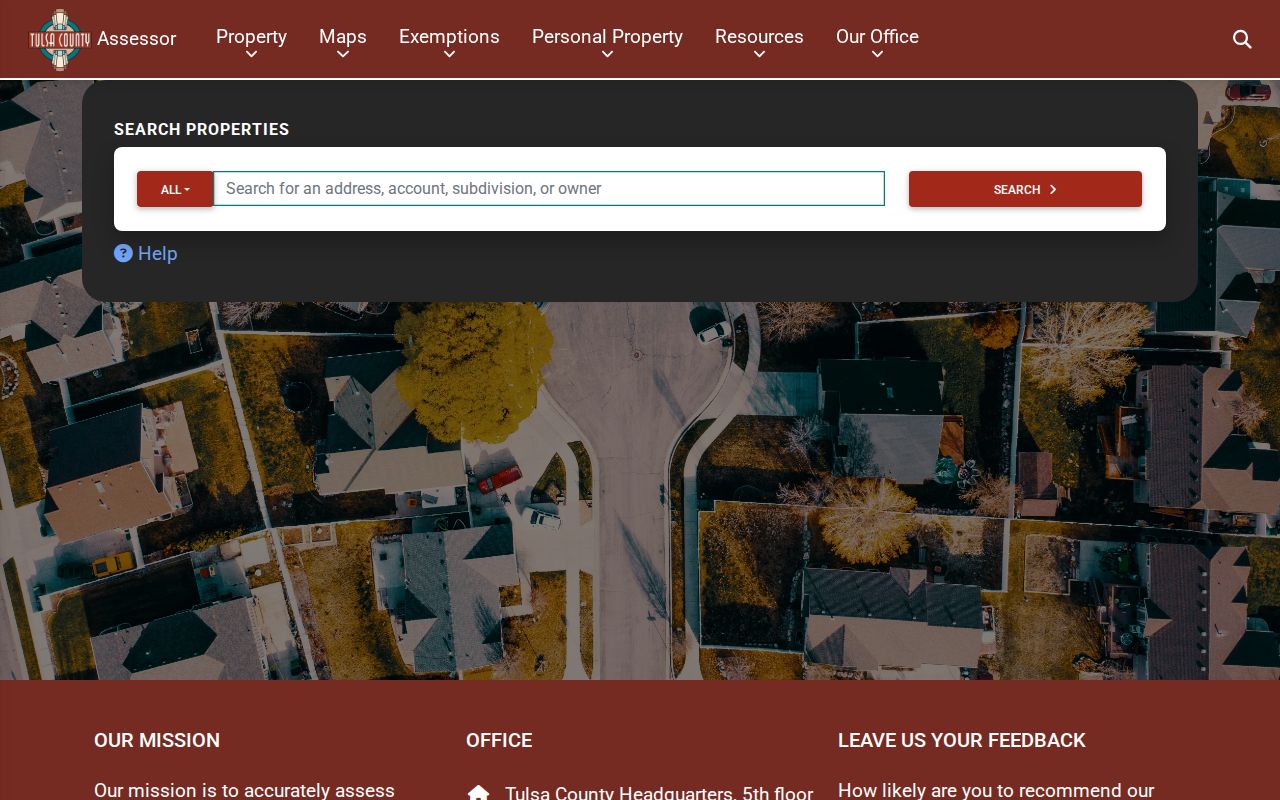
Tulsa County Assessor search uses one broad text field for an address, account, subdivision, or owner. Begin less specifically, then filter result columns. The office advises avoiding periods, commas, and apostrophes; exact quotes and negative terms can refine a search. A returned parcel card may show the account number, situs address, mailing address, owner, parcel ID, account type, legal description, section-township-range, improvement facts, tax values, exemptions, notice date, and sales or deed rows.
The Tulsa County Assessor search illustrates the broad property query used after a Broken Arrow address is confirmed in Tulsa County.
An assessor card is useful for matching identifiers, not for declaring recorded title or current residence. The assessor’s policy says the office is not the legal ownership repository and its data may not be fully current. A County Clerk instrument is the recorded-land evidence; tax and mailing fields can be dated or serve a different purpose.
| Assessor search field | Use for a Broken Arrow parcel |
|---|---|
| Address | Find a site when the city GIS first places it in Tulsa County. |
| Account | Return one known assessment account; Tulsa examples begin with R. |
| Subdivision | Compare a recorded subdivision name with parcel results. |
| Owner | Locate a displayed tax or ownership index name, then verify the deed record. |
| Result filters | Narrow broad results without adding punctuation to the initial search. |
Broken Arrow Directory Street Translation
Broken Arrow adopted its present street-numbering system in 1973, although the system’s dates reach back to 1948. Historical searching therefore needs both the source street string and a modern form. Downtown’s original east-west lettering included A through J. E Avenue became Broadway, and 2nd Street became Main. College was once Avenue D, while Commercial was Avenue F before the 1910 College Addition.
County-style numbered roads add another layer. Examples include Aspen and 145th E, Elm and 161st, 9th or Lynn Lane and 177th E, and 23rd or County Line and 193rd E. Search both versions in old newspapers and directories. Preserve the original wording in notes rather than silently replacing it, then check the current parcel and street centerline.
- Parcel
- A mapped unit of land identified in assessment records.
- Record index
- A search tool pointing to records; an index hit is not always an image or certified copy.
- Situs address
- The physical property address shown on a parcel card, distinct from a mailing address.
- Criss-cross directory
- An address-arranged directory that can place dated household entries along a street.
Broken Arrow Resident Record Roles
Source labels matter more than a combined name list. A deed names parties to a recorded instrument. The assessor displays a property and tax record. The voter portal verifies an eligible voter’s registration context. A court docket identifies a party in a case. A historical directory places someone at an address or business on a date. Each role has a different keeper, date, and level of authority.
| Source category | What it can offer | How to treat a Broken Arrow result |
|---|---|---|
| Official county property index | Parcel, tax, and displayed owner fields | Check the County Clerk instrument for recorded title. |
| Official county deed index | Recorded instrument parties and legal land trail | Note whether access is index-only or includes an image. |
| Official individual voter lookup | Registration status, districts, and polling details | Use only with matching required identity fields and the source date. |
| Commercial search service | Potential leads drawn from mixed sources | Verify each item against its named public custodian and date. |
Official sources have a named custodian, defined scope, and a way to verify a record. Commercial search services may combine records of different dates and roles, so compare them only as leads against the custodian record. When sources conflict, retain the record role instead of choosing the most recent-looking field. Note: A name match without an address, date, and record role should remain an unconfirmed lead.
Current Broken Arrow Resident Sources
Current-looking records are still source-specific. The table separates the sources that can help with a Broken Arrow directory question from the conclusions they support. County is the first filter for parcel and deed work. Voter privacy rules and record restrictions can limit what an individual search displays.
| Source channel | What it can identify | Custodian | Access status |
|---|---|---|---|
| Assessor property card | Parcel, site, displayed owner, mailing and tax fields | Tulsa or Wagoner assessor | Public portal route |
| Recorded land index | Grantor, grantee, legal description, and instrument trail | Matching County Clerk | Index route; image conditions vary |
| Individual voter check | Registration, precinct, districts, ballot, and polling place | Oklahoma Election Board | Required identifying fields |
| Municipal record request | Specified city record categories | Broken Arrow City Clerk | Request and exemption review |
| Historic library material | Dated directory, newspaper, census, and local-history clues | Tulsa Library or OHS | Online and onsite collections |
Use the source that matches the question. A deed trail is stronger for recorded ownership than an assessor display. A current registration check is different from a dated city directory. For one named person, the Broken Arrow resident lookup route focuses on confirming a source trail without merging roles.
Broken Arrow Resident Voter Privacy
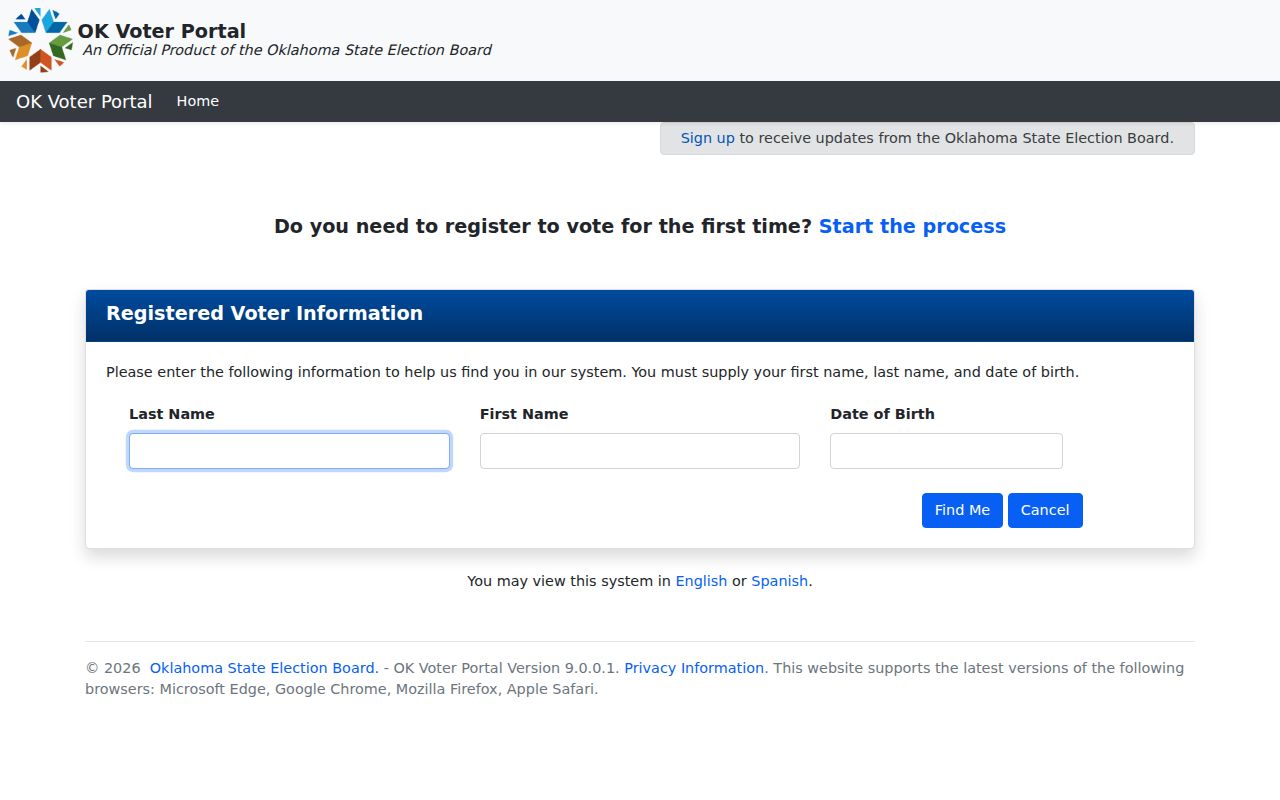
The Oklahoma Voter Portal requires last name, first name, and date of birth for its individual lookup. It can return registration status, districts, sample ballot, and polling place. Voter history may take four to five weeks to appear after a statewide election. Registration evidence should be dated and should not be read as a complete biography or proof of present residence.
The Oklahoma Voter Portal is the official route for an individual registration search.
Protected addresses can be suppressed for Address Confidentiality Program participants and other protected classes. Sensitive identifiers are not public. A missing address may reflect a privacy rule, not an error to work around.
Broken Arrow Resident Court Routes
Court routing also follows jurisdiction. Broken Arrow Municipal Court handles city-ordinance traffic and misdemeanor matters and does not provide a public party-name search on its official page. District-court matters belong to Tulsa or Wagoner County, based on the court record, and are searched through OSCN. The statewide form offers county and court choices, case number, party name, birth-date ranges, case type, filed or closed dates, and traffic citation fields.
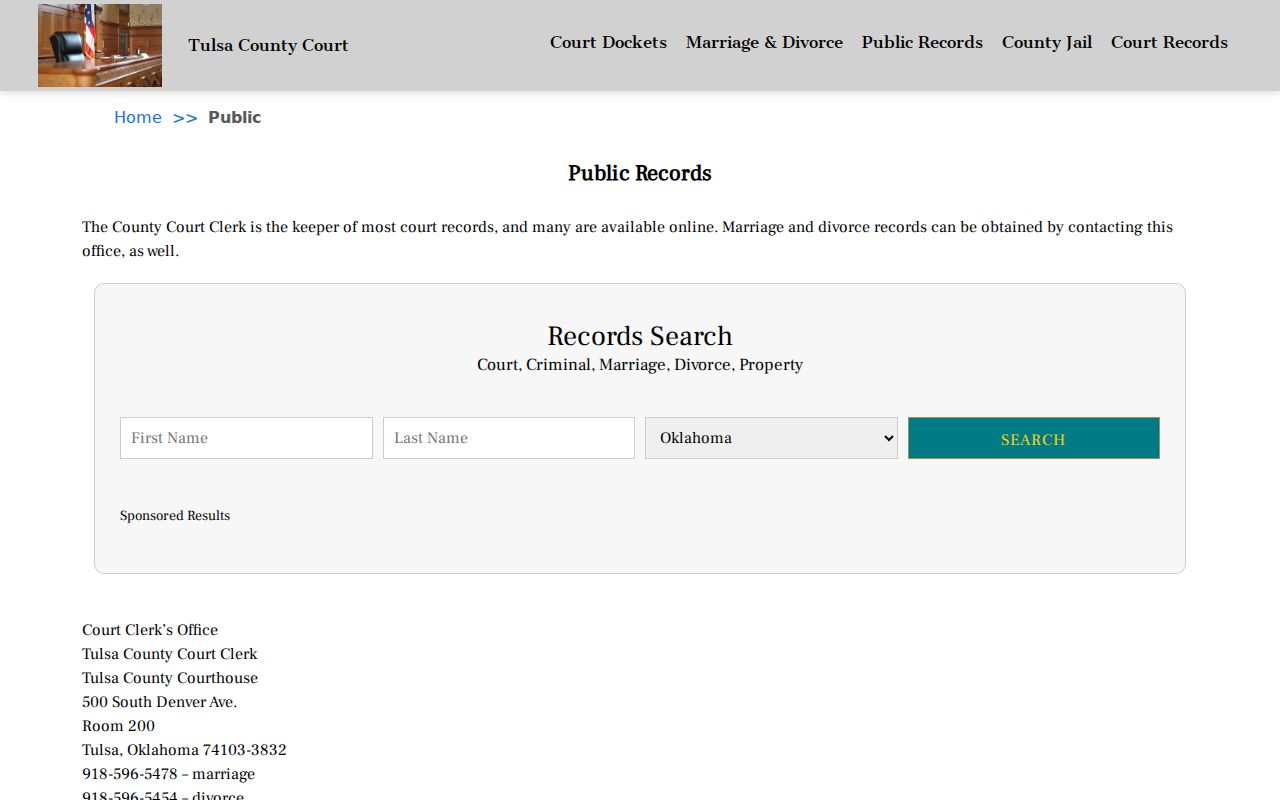
The Tulsa County Court Clerk public-records route shows separate court, criminal, marriage, divorce, and property or probate services. OSCN’s automated access can be affected by Turnstile, and a missing online result is not proof that no case exists.
Record the court, county, case number, party role, filing date, disposition or status date, source URL, and access date. Juvenile, sealed, expunged, and other restricted material may not be available.
Broken Arrow Resident Vital Access
Oklahoma State Department of Health records are not a general open-record request. Oklahoma birth certificates become open at 125 years and death certificates at 50 years, subject to the application, identification, and fee process. The free OK2Explore index is different from a certificate. Its birth entries appear after 20 years and death entries after 5 years, and an index result only identifies a record on file.
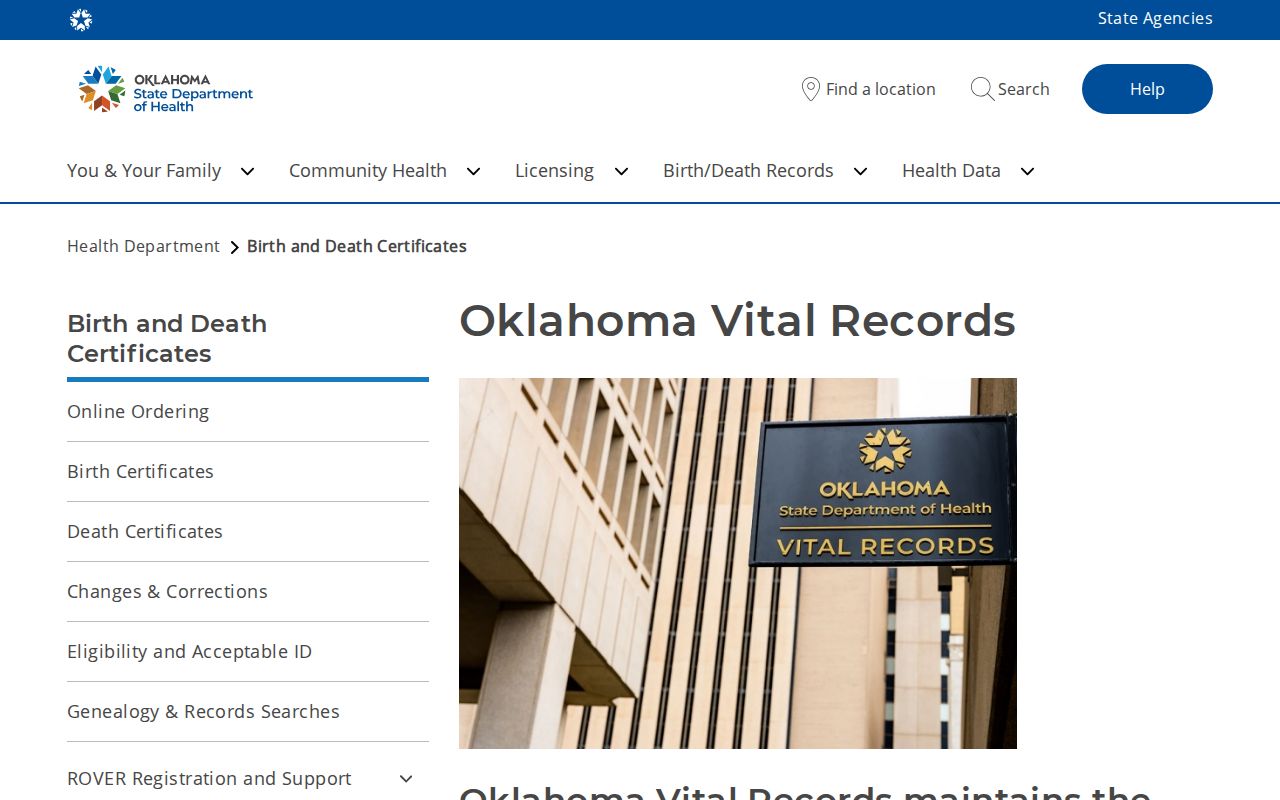
The Oklahoma Vital Records service provides the certificate and ordering route.
Marriage licenses and divorce decrees follow the County Court Clerk, not the state birth and death route. For younger certificates, statutory relationship or authorization and identity evidence control access.
Broken Arrow Directory ZIP Routes
Broken Arrow postal use includes ZIP codes 74011, 74012, 74013, and 74014. The first two are primarily Tulsa County areas. ZIP 74013 reaches southeastern and eastern areas, while 74014 reaches eastern and southern areas where Wagoner County portions and city boundaries require special care. Postal delivery geography can change, so use the current USPS address lookup for a delivery question.
ZIP is not a county or municipal-boundary field. A Broken Arrow mailing city can be outside city limits, and the county for assessment or deed work comes from the parcel. Keep postal city, municipal status, and county as separate record fields when they are known.
Broken Arrow Records Request Method
The Oklahoma Open Records Act, 51 O.S. §§24A.1-24A.31, is the state framework for municipal and county records requests. A useful Broken Arrow request names the custodian, exact address, parcel, case, or instrument number, record class, date range, county, desired format, requester contact, and fee limit. The city asks for reasonable specificity, and both city and county custodians describe direct costs and exemptions rather than a fixed automatic response date.
Use the Broken Arrow legal and open-records route for non-police city records. Police records have their own form, photo-ID process, offense-specific access limits, and redactions. Keep the submission date, confirmation, invoice, reply, redaction basis, delivered pages, and access date with the result.
Lawful use. Use Broken Arrow records for personal, lawful research, civic transparency, family history, or an authorized records request. Do not use an address or record trail to stalk, harass, intimidate, or harm anyone.
Historic Broken Arrow Resident Records
The strongest historical address trail combines sources that are plainly dated. Tulsa Library points researchers to Broken Arrow Ledger microfilm, the local genealogical society collection at Museum Broken Arrow, White Church Cemetery material, genealogy CDs, and a published 1910 federal census for Broken Arrow and adjoining townships. Regional Tulsa directories include runs for 1928-1932, 1939-1941, and 1948, but Broken Arrow coverage can be indirect and should be checked before it is treated as local evidence.
The 1905 Sanborn fire-insurance map and the early Broken Arrow Ledger offer a story of the original townsite before modern growth. The Library of Congress map has two March 1905 sheets and can show building footprints, materials, use, and named streets from that date. Gateway’s Ledger collection has 106 issues and 867 pages from the early run, including examples from 1904-1906, but it is not continuous coverage.
Use the Oklahoma Historical Society Research Center for city directories, phone books, census indexes, newspapers, maps, and local-history holdings. Search E Avenue and Broadway, or 2nd Street and Main, as parallel terms. A historical entry is a dated clue, never a substitute for a current record.